Mostrando postagens com marcador tourism. Mostrar todas as postagens

domingo, 11 de maio de 2014

Itajuru’s Park
            The homonymous fountain was built there, in 1847, because D. Pedro II was coming to Cabo Frio. The fountain has seventeenth-century tiles from Portugal. It was restored in 1979 and the local was expanded, becoming a garden. The park has native trees like pau-brasil and guabiroba and a charming lake. It’s a beautiful and calm place, excellent for relaxing


House-atelier Carlos Scliar

            Cabo Frio was the favorite place of the painter, who was inspired by it beauty. The atelier in found at the end of Boulevard Channel and accommodates good part of the paintings of the artist and other Brazilian artists. The original furniture, the atelier and the tools of the painter were preserved. A statue of the painter, in natural size, was made in 2006 in front of the house where the artist has lived.


Charitas

            It was built in XIX century with the objective of being a House of Charity, but soon after that it became a hospital. It’s located downtown and promotes seminaries, workshops, lectures, artistic exhibitions and other events. It also offers classes, such as piano, English, drawing, painting and others. The backyard accommodates the pillory, of 1660, a rock column in which were attached the   council announcements and where the criminals were exposed.  Visitation time: 14h until 20h, Tuesday to Sunday. 


Church Nossa Senhora da Assunção
It is the seventh oldest church in Brazil, built in the  XVII century and located in the city center, opposite the Praça Porto Rocha. Have a beautiful baroque architecture and gold decorations. There are some inside pieces of rare beauty, highlighting the baptismal font, the casket of the Blessed and the screens of the Four Evangelists. There are also beautiful images of the XVII century. 

It is said that a picture was commissioned from Helena, but sent to Our Lady of the Assumption by mistake. The church then housed this image and was named after him.


Nossa Senhora dos Anjos Monastery
            
The monastery was inaugurated in 1686 and is one of the most highlighted examples of colonial architecture in Brazil. It has beautiful paintings on the presbytery ceiling, on the panels of the lateral altars and on the floor. It also has cemetery, cloisters, cells and inner yards. The convent accommodates the Museum of Sacred Art since 1924 and the Museum of Religious and Traditional Art since 1982. It’s located downtown, below Morro da Guia, on Santo Antonio square

quinta-feira, 8 de maio de 2014

Chapel of Nossa Senhora da Guia


            According to a local tale, the image of Nossa Senhora da Guia had an altar at the monastery, but it disappeared when put there. On the next day, it reappeared on top of the hill. It was decided to lift a chapel to accommodate the image, in 1740. 


The hill where the image appeared is known as “Morro da Guia”. It’s the highest point of Cabo Frio and you can see the whole city from there, there’s an observatory, next to the chapel. The view that this place provides of the city is mesmerizing.


Boulevard Channel

The Boulevard Channel has a lot of bars, restaurants and nightclubs, being one of the most active places in town at night. The edge of the channel is made of Portuguese rocks and a wooden deck. It has a great view of Itajuru Channel and Itajuru’s Bridge.


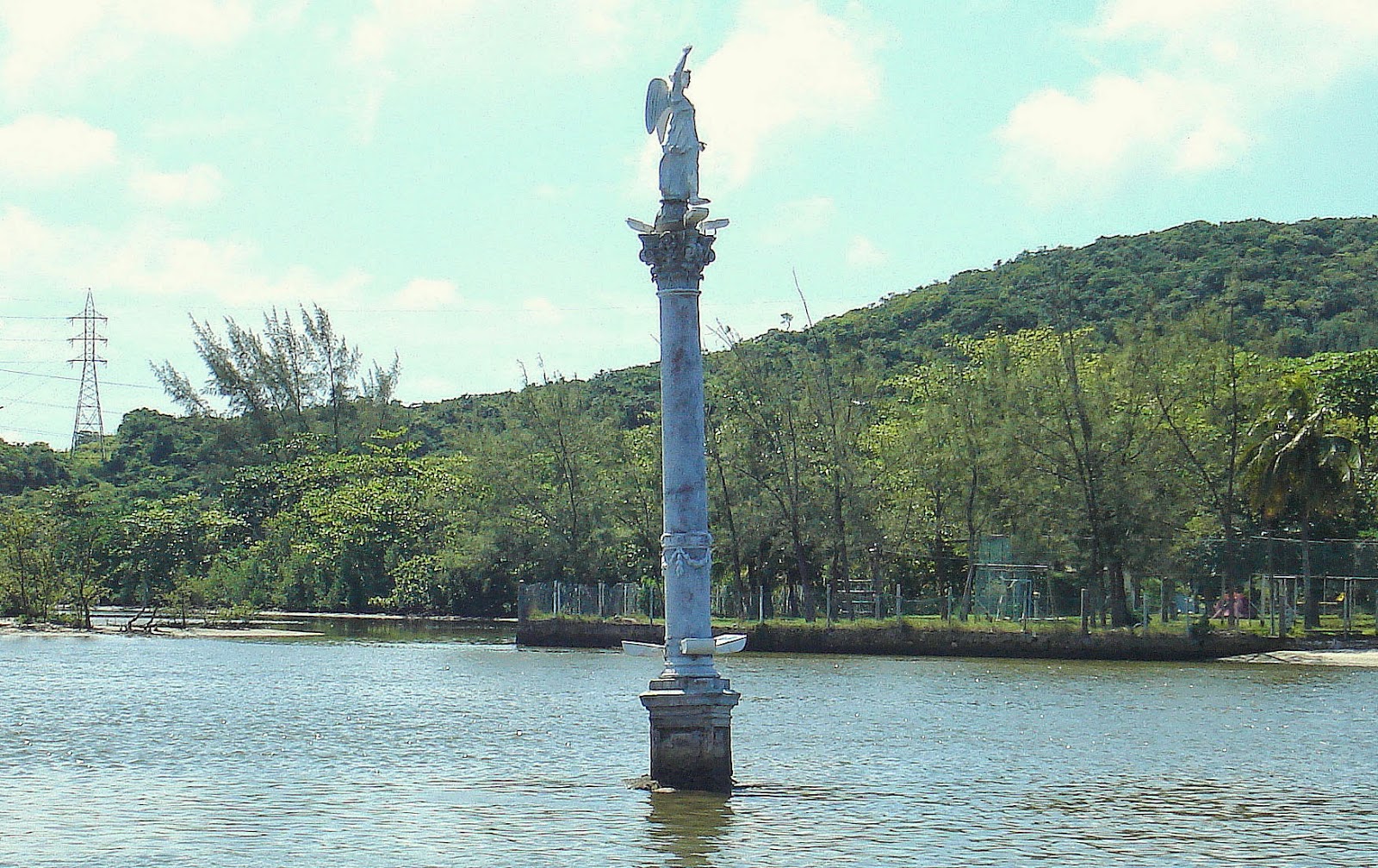
Anjo Caido (Fallen Angel)

The Anjo Caido statue is situated at Itajuru Channel, on Portinho neighborhood. It was lift in 1907 to celebrate the opening of Palmer Channel. It’s a monument of classic inspiration that represents the Goddess of Victory.


 It consists on the image of an angel with open wings on a column of Corinthian stile, nine meters (29ft 621⁄64 in) tall. As time went by, the tide and the winds inclined the monument, and then it started to be called “Anjo Caido” (Fallen Angel).


Passagem’s Neighborhood

The Passagem’s Neighborhood is one of the oldest of Cabo Frio. It has this name because it was the point of Itajuru Channel where the crossing was made. The first habitations and factories of Cabo Frio appeared there, in XVII century.


São Benedito's Church


            The constructions made by Portuguese, slaves and fishermen were conserved, giving this neighborhood a beautiful antique architecture. Of these constructions, the ones that stand out most are São Benedito’s Church and the homonym square. 

The wharf of Passage has a beautiful view of Itajuru Channel, and there are a lot of colorful boats boarded there. 

terça-feira, 6 de maio de 2014

Fort São Mateus


The Fort São Mateus is situated at Fort Beach. The Fort was built in XVII century, by Portuguese, in order to protect “Cabo Frio’s Land” from attacks from English, French, Dutch and pirates. In century XX it was restored a lot of times, and even getting a museum, in 1978.


Fort São Mateus is a great sightsee, full of history. The construction didn’t change much through the years, lots of the cannons used in battles are still there facing the sea, and so is the cabin.


Its inside also remains the same. The House Of Command, the Troop Quarter, the kitchen, the House of Gunpowder and the cell, on lower level, are still there. It’s a stunning place to visit, with a view to Japanese’s Island and Fort Beach.